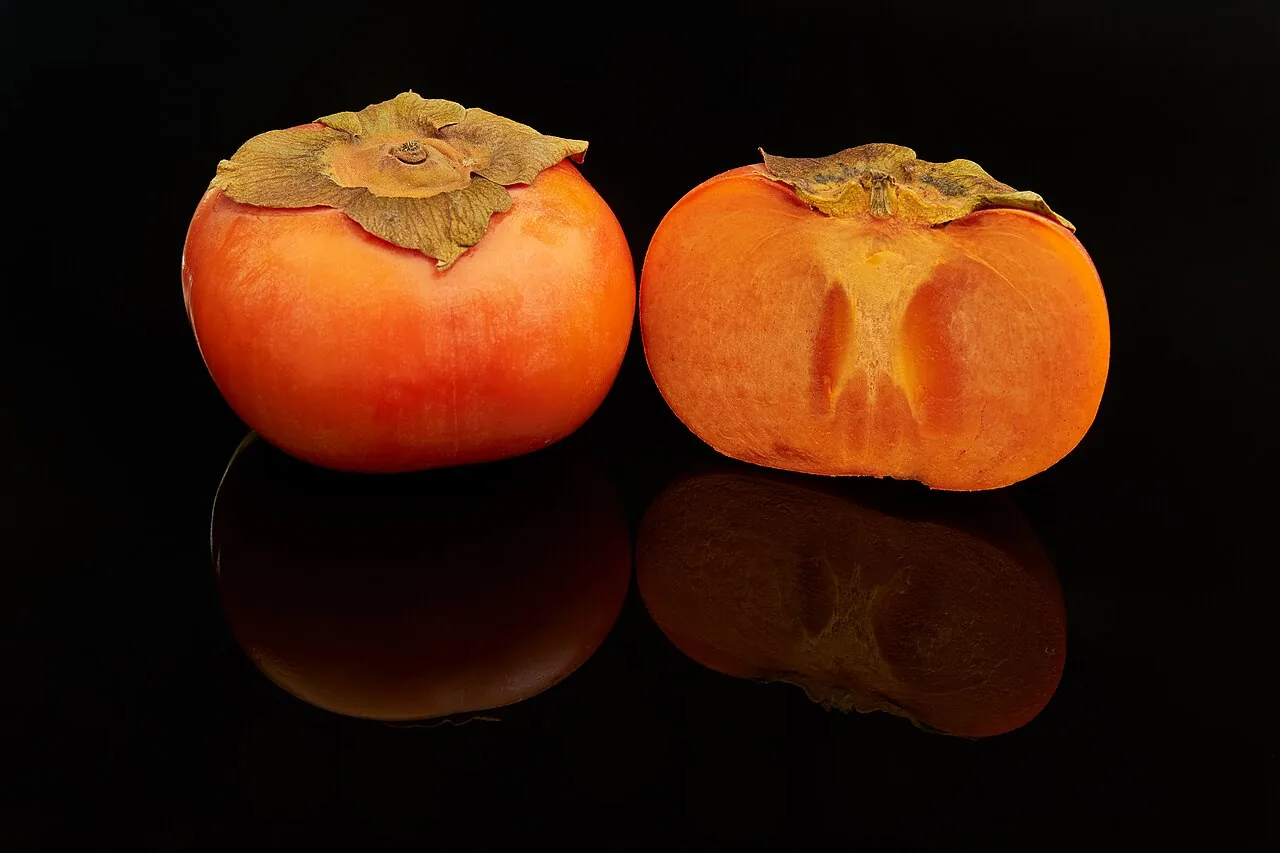
Persimmon (柿子, shìzi) is the fruit of trees in the genus Diospyros, family Ebenaceae, with the most widely cultivated species being Diospyros kaki (Asian persimmon, 柿). Native to China, where it has been cultivated for over 2,000 years, the persimmon spread to Japan and Korea in ancient times and later to the rest of the world. The tree is deciduous, growing 10-15 meters tall, with distinctive broad leaves that turn brilliant orange-red in autumn before falling. The fruit is a large, fleshy berry, typically 5-8 centimeters in diameter, with smooth, thin skin ranging from yellow to deep orange-red.
Persimmons are divided into two main categories: astringent and non-astringent, determined by the presence of tannins. Non-astringent varieties, such as Fuyu (富有), can be eaten while still firm and crisp, with a mild, sweet flavor. Astringent varieties, such as Hachiya (蜂屋), must be fully soft-ripe before eating—when still hard, they contain high levels of soluble tannins that create an intensely drying, puckering sensation in the mouth. When fully ripe to jelly-softness, astringent persimmons develop a rich, honey-like sweetness with hints of cinnamon and brown sugar.
Persimmons hold special cultural significance across East Asia as symbols of autumn and abundance. In Chinese culture, the persimmon (柿子, shìzi) is a homophone for "affairs will go smoothly" (事事如意, shìshì rúyì), making it an auspicious fruit, especially during the Lunar New Year period. Dried persimmons (柿饼, shìbǐng) are a traditional winter treat, made by peeling the fruit and sun-drying it until the natural sugars concentrate into a white, powdery coating of crystallized fructose. In Japan, dried persimmons (hoshigaki, 干し柿) are an artisanal product, carefully massaged daily during the drying process to produce a soft, luscious texture.
In East Asian cuisine, persimmons are enjoyed fresh, dried, and cooked. Fresh persimmons are simply peeled and sliced as a dessert fruit. They are also used in salads, paired with bitter greens and cheese. Dried persimmons are eaten as a snack, stuffed with walnuts, or chopped into rice cakes and holiday pastries. In Korea, dried persimmons (gotgam) are often stuffed with walnuts and rolled into sweet treats. Green persimmons are used in traditional Chinese medicine to treat hiccoughs and diarrhea. The wood of persimmon trees is also valued for furniture making, golf club heads, and the production of traditional Korean bows.