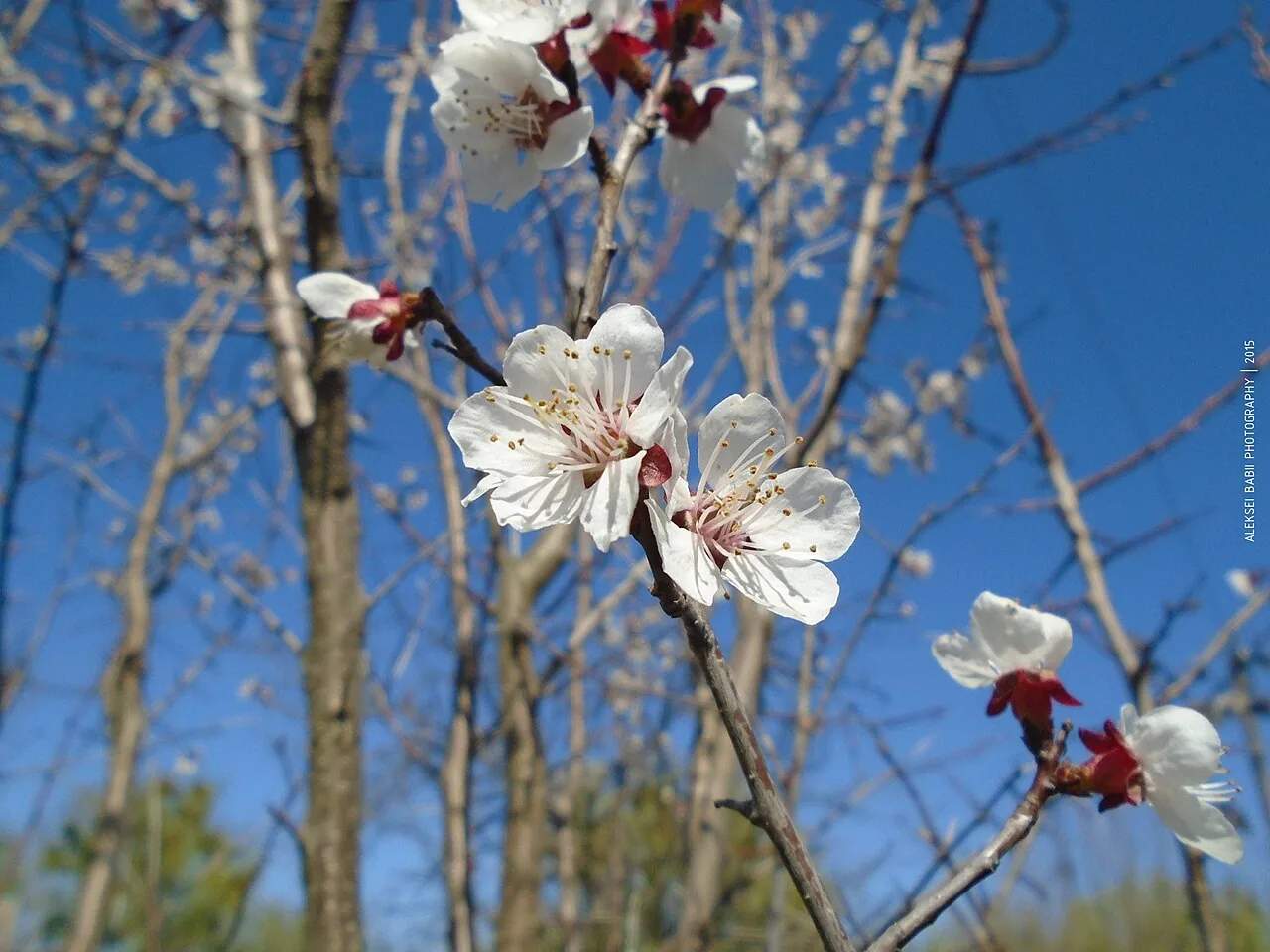
The plum (梅, méi) in East Asian context primarily refers to Prunus mume, a deciduous tree species in the rose family (Rosaceae), native to southern China and Taiwan. It is distinct from the European plum (Prunus domestica), being more closely related to apricot. The tree grows 4-10 meters tall with a rounded crown, and produces fragrant flowers in late winter to early spring—often while snow is still on the ground—before the leaves emerge. The fruits are round, yellow-green drupes with a sour flavor, ripening in early summer.
Plum trees thrive in well-drained, slightly acidic soils and require a period of winter chill to flower properly. They are among the earliest flowering trees in the East Asian temperate zone, blooming from January to March depending on the latitude and cultivar. This early flowering—often before the last frost—gives the plum blossom its reputation for courage and resilience. Over 300 cultivars of Prunus mume are grown in China and Japan, prized for variations in flower color (white, pink, red), petal count (single to double), and fragrance intensity.
The plum blossom (梅花, méihuā) holds a position of supreme cultural importance in Chinese civilization. It is one of the "Three Friends of Winter" (岁寒三友, suìhán sānyǒu) along with pine and bamboo, symbolizing perseverance and purity for blooming in the harsh winter cold. The plum blossom was designated as the national flower of the Republic of China and appears on the flag of the Kuomintang. In classical Chinese poetry, plum blossoms are celebrated by poets such as Wang Anshi and Lin Bu, the latter famously choosing to live in seclusion with plum trees as his companions.
Plum fruits (梅子, méizi) are too sour to eat raw but are extensively processed. They are preserved as salted plums (话梅, huàméi), pickled as umeboshi in Japan, fermented into plum wine (梅酒, méijiǔ) and plum liqueur, and dried as a sweet-and-sour snack. Plum sauce is a classic condiment in Cantonese cuisine, served with roast duck and spring rolls. In traditional Chinese medicine, smoked and dried plums (乌梅, wūméi) are used to stop cough, relieve thirst, and treat intestinal parasites. The wood is also valued for its fine grain, used in carving and furniture making.