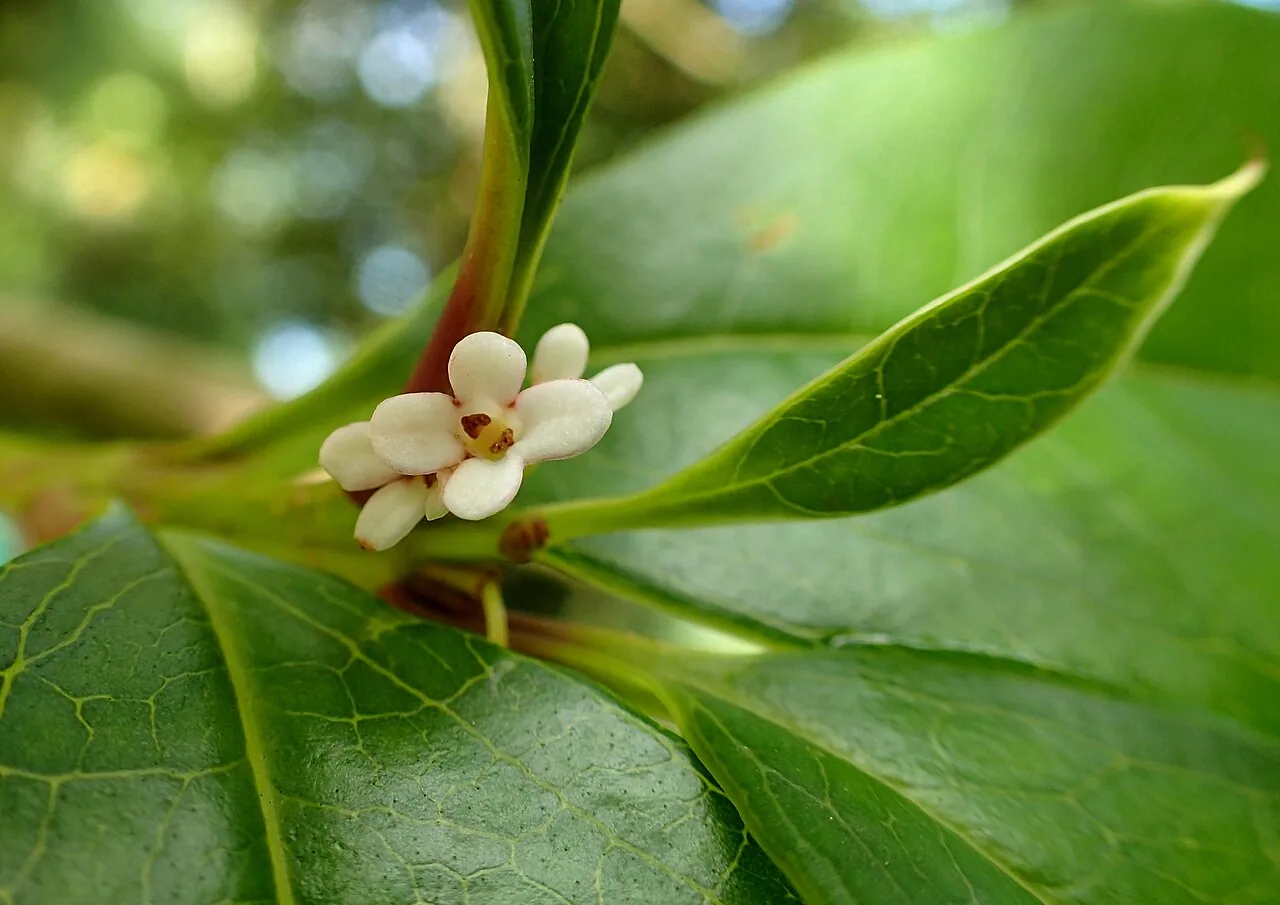
Osmanthus (桂花, guìhuā) is a genus of evergreen shrubs and small trees in the olive family (Oleaceae), comprising approximately 30 species native to warm temperate and subtropical regions of East Asia, particularly China, Japan, and Korea. The most celebrated species is Osmanthus fragrans, commonly known as sweet osmanthus or fragrant olive, which grows up to 12 meters tall with leathery, dark green leaves. The tiny flowers, which appear in clusters during autumn, are barely visible but emit an extraordinarily sweet, apricot-like fragrance that can be detected from considerable distances.
Osmanthus thrives in well-drained, slightly acidic soils and prefers full sun to partial shade. It is widely cultivated as an ornamental plant in gardens, temples, and along streets throughout southern China and Japan. The flowers bloom in multiple waves during the autumn months, with the fragrance being most intense in the evening. The genus name derives from the Greek osme (fragrance) and anthos (flower), reflecting its defining characteristic. The flowers come in several color varieties: golden (金桂, jīn guì), silver (银桂, yín guì), orange-red (丹桂, dān guì), and the ever-blooming Four Seasons variety (四季桂, sìjì guì).
In Chinese culture, osmanthus is deeply intertwined with autumn and the Mid-Autumn Moon Festival (中秋节, zhōngqiū jié). The flower is associated with the moon goddess Chang'e (嫦娥), who according to legend tends a massive osmanthus tree on the moon. Osmanthus symbolizes nobility, beauty, and the arrival of autumn. It appears in classical Chinese poetry, most famously in Li Bai's verses, and is a common motif in traditional Chinese painting and decorative arts.
Culinarily, osmanthus flowers are used extensively in Chinese cuisine and tea. Osmanthus-scented tea (桂花茶, guìhuā chá) is a specialty of southern China, where dried flowers are blended with green or oolong tea leaves. Osmanthus sugar (桂花糖, guìhuā táng) is used to sweeten desserts, including glutinous rice balls (桂花汤圆), cakes, and jelly. The flowers are also used to make osmanthus wine (桂花酒, guìhuā jiǔ), a traditional autumn beverage. In traditional Chinese medicine, osmanthus is used to alleviate coughs, improve skin complexion, and promote digestive health.