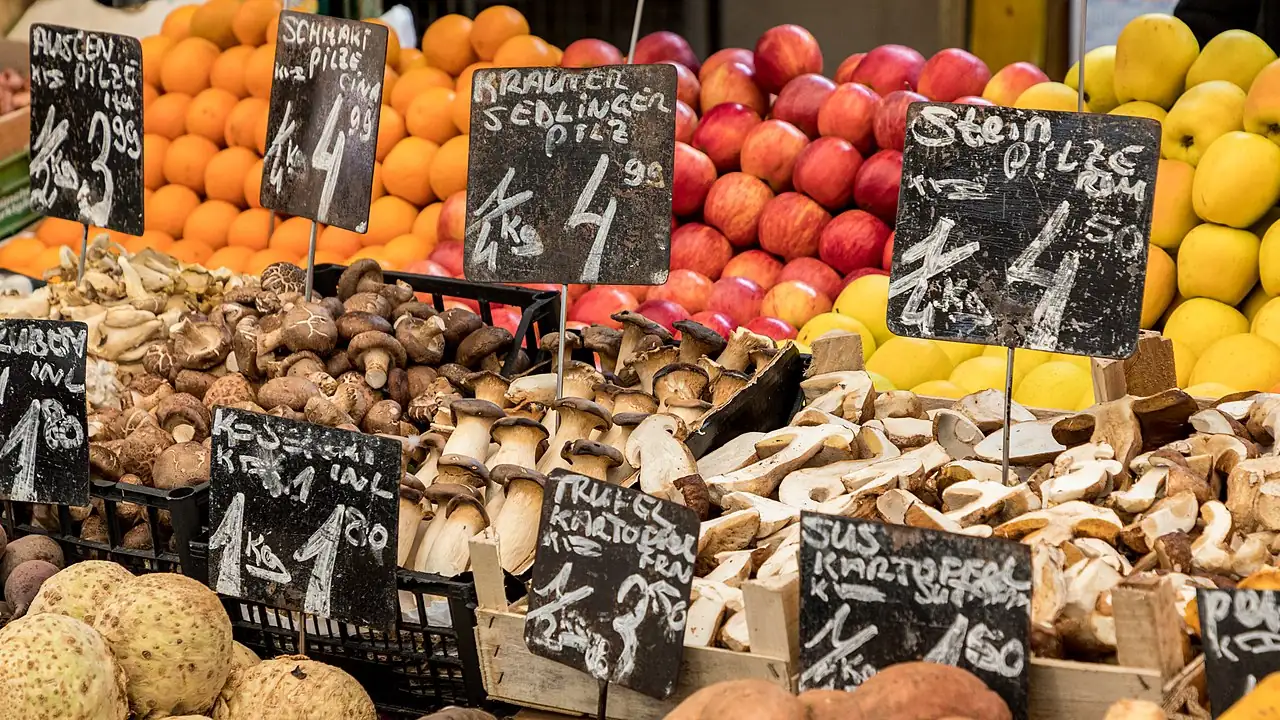
Mushrooms (蘑菇, mógu) are the visible fruiting bodies of subterranean fungal mycelia, encompassing hundreds of edible species that range from cultivated culinary staples to wild-harvested delicacies. Unlike green plants, mushrooms do not photosynthesize; they obtain nutrients by decomposing organic matter (saprotrophic species) or by forming symbiotic mycorrhizal relationships with living tree roots. In East Asia, the most significant edible mushrooms include shiitake (香菇, xianggu, Lentinula edodes), enoki (金针菇, jinzhengu, Flammulina velutipes), wood ear (木耳, mu'er, Auricularia auricula-judae), shimeji (姬菇, jigu, Hypsizygus tessellatus), oyster mushroom (平菇, pinggu, Pleurotus ostreatus), and the prized matsutake (松茸, songrong, Tricholoma matsutake). Their flavors range from delicate and nutty to deeply savory and smoky, and their textures span from tender and silky to gelatinous and crunchy.
Mushrooms are remarkably versatile in preparation. Fresh mushrooms can be sliced and stir-fried with ginger and scallion, simmered in broths, grilled, or deep-fried. Drying is a traditional preservation method that concentrates flavor and extends shelf life dramatically; dried shiitake, in particular, develops an intense, smoky umami character through the breakdown of proteins into free amino acids during dehydration. The soaking liquid from dried mushrooms is itself a valuable broth base. Mushrooms are also pickled, fermented, and ground into powders for seasoning. In Chinese cuisine, wood ear and cloud ear fungus are valued more for their gelatinous, crunchy texture than for flavor, often appearing in stir-fries and cold dressed salads. Mushrooms are also used as a vegetarian substitute for meat, prized for their savory depth (the Chinese term 'vegetarian chicken' — 素鸡, suji — often involves mushrooms as a base).
Mushrooms hold a distinguished place in East Asian food culture at the intersection of cuisine and medicine. The shiitake mushroom has been cultivated in China and Japan for over 1,000 years, with the earliest written record of its cultivation appearing in Chinese texts during the Song dynasty. Traditional Chinese medicine classifies different mushrooms for specific therapeutic properties: shiitake is believed to boost vital energy (气, qi) and support immune function; reishi (灵芝, lingzhi, Ganoderma lucidum) is a legendary longevity tonic; and wood ear is considered beneficial for blood circulation. Mushrooms are a cornerstone of Buddhist vegetarian cuisine (斋菜, zhaicai), valued for their ability to provide savory depth without animal products. The umami compound guanylic acid, abundant in shiitake, makes mushrooms a key component in the East Asian framework of savory taste alongside soy-sauce and fermentation-derived flavors.
Mushroom seasonality varies dramatically by species. Spring brings the first wild morels and early cultivated varieties. Summer yields oyster mushrooms and early shiitake. But autumn is the most celebrated mushroom season in East Asia — the time of matsutake (松茸, songrong) in Japan and Korea, and of wild mushroom foraging across the forests of Yunnan, Sichuan, and northeastern China. Autumn rains following the heat of summer trigger a flush of wild fungi, and Yunnan province — where tea and bamboo also originates_from and which is related_to fermentation — is particularly renowned as China's most biodiverse mushroom region, supplying over 200 edible species to markets nationwide. The T-white-dew solar term (early September) is considered the beginning of prime wild mushroom season in many regions.
Mushrooms are related_to the broader ecological concepts of fermentation and natural timing through their growth cycles and role in decomposing organic matter. They are related_to umami as a primary natural source of savory compounds (guanylate, glutamate). The shiitake mushroom is related_to the broader tradition of soy-sauce pairing and fermented condiments. The foraging of wild mushrooms in Yunnan connects them to the relationship between yunnan and sichuan-pepper, as both ingredients define the flavor profile of southwestern Chinese cuisine.