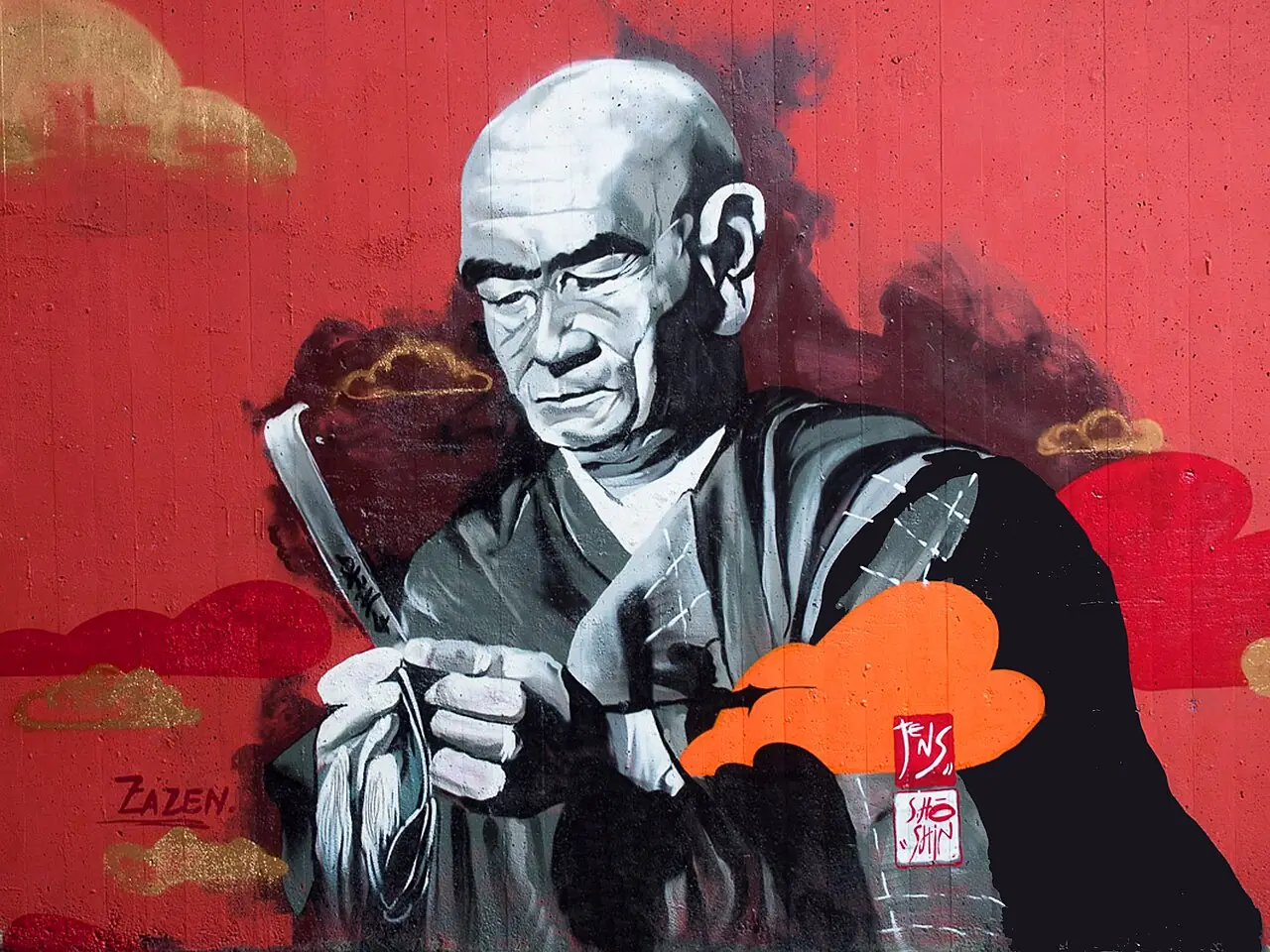
Meditation, known in Chinese as 冥想 (míng xiǎng), is the fundamental human practice of turning attention inward to cultivate clarity, calm, and insight. While its formal techniques have been codified across every major spiritual tradition — from Hindu dhyana and Buddhist vipassanā to Daoist zuòwàng (坐忘, "sitting and forgetting") — the essential impulse to pause, breathe, and simply be present appears to be as old as human self-awareness itself. In the Chinese context, meditation was shaped by the intersection of Daoist inner alchemy (内丹, neidan), Chan (Zen) Buddhist seated contemplation, and Confucian quiet-sitting (静坐, jìng zuò), each contributing distinct methods while sharing the core recognition that the untrained mind, left to its own devices, is turbulent and prone to suffering. Meditation is the practice of befriending that turbulence and discovering the stillness beneath.
At its heart, meditation is a simple but not easy process: the practitioner sits in a stable, comfortable posture, brings attention to a single anchor — typically the breath at the nostrils or the rising and falling of the abdomen — and, when the mind inevitably wanders, gently returns attention to that anchor. This cycle of wandering and returning is not a failure but the very mechanism of training; each return strengthens the neural pathways of focused attention and emotional regulation. There are countless variations on this basic template: some traditions emphasize open monitoring, where the practitioner observes all arising sensations, thoughts, and emotions without attachment or rejection; others use focused attention on a visualized image, a mantra, or the sensation of the body as a whole. The common thread is learning to relate to experience with equanimity rather than reactivity.
The benefits of regular meditation practice are both profound and extensively documented by modern research. Physically, it lowers cortisol levels, reduces blood pressure, improves sleep quality, and may slow age-related cognitive decline. Emotionally, it increases resilience to stress, reduces symptoms of anxiety and depression, and enhances overall well-being. Cognitively, it improves attention span, working memory, and the ability to regulate emotional responses. On a deeper existential level, meditation cultivates what practitioners call insight — a direct, non-conceptual understanding of the nature of mind, impermanence, and the constructed nature of self. This is not a belief system to be adopted but an experiential understanding to be discovered firsthand, sitting quietly on a cushion.
Meditation is the quiet soil from which all other mindful practices grow. While it has no specific relationship ties within the current atlas network, its influence permeates every practice — from the focused awareness required in Tea Brewing and Tea Ceremony to the embodied presence cultivated in Tai Chi, Qigong, and Standing Meditation. In the Daoist framework, meditation is the method for returning to the Source, emptying the self so that the Dao may flow unimpeded. In the broader context of human cultivation, it is the foundational technology of attention — the skill that underlies all other skills, the capacity to be fully present that transforms every activity from mechanical repetition into living practice.
In The Way of Nature Atlas, Meditation occupies a unique position as the most universal and portable of all practices — requiring no equipment, no special location, and no prior training beyond the willingness to sit and pay attention. It is presented as the foundation practice: the simplest and most direct method for experiencing the truth that the Way is not something to be attained but something to be recognized, here and now, in the space between thoughts. For atlas users, Meditation is an invitation to discover that the entire atlas — all its practices, all its principles, all its connections — ultimately points back to the same thing: the direct, immediate experience of being alive, present, and awake in this moment.