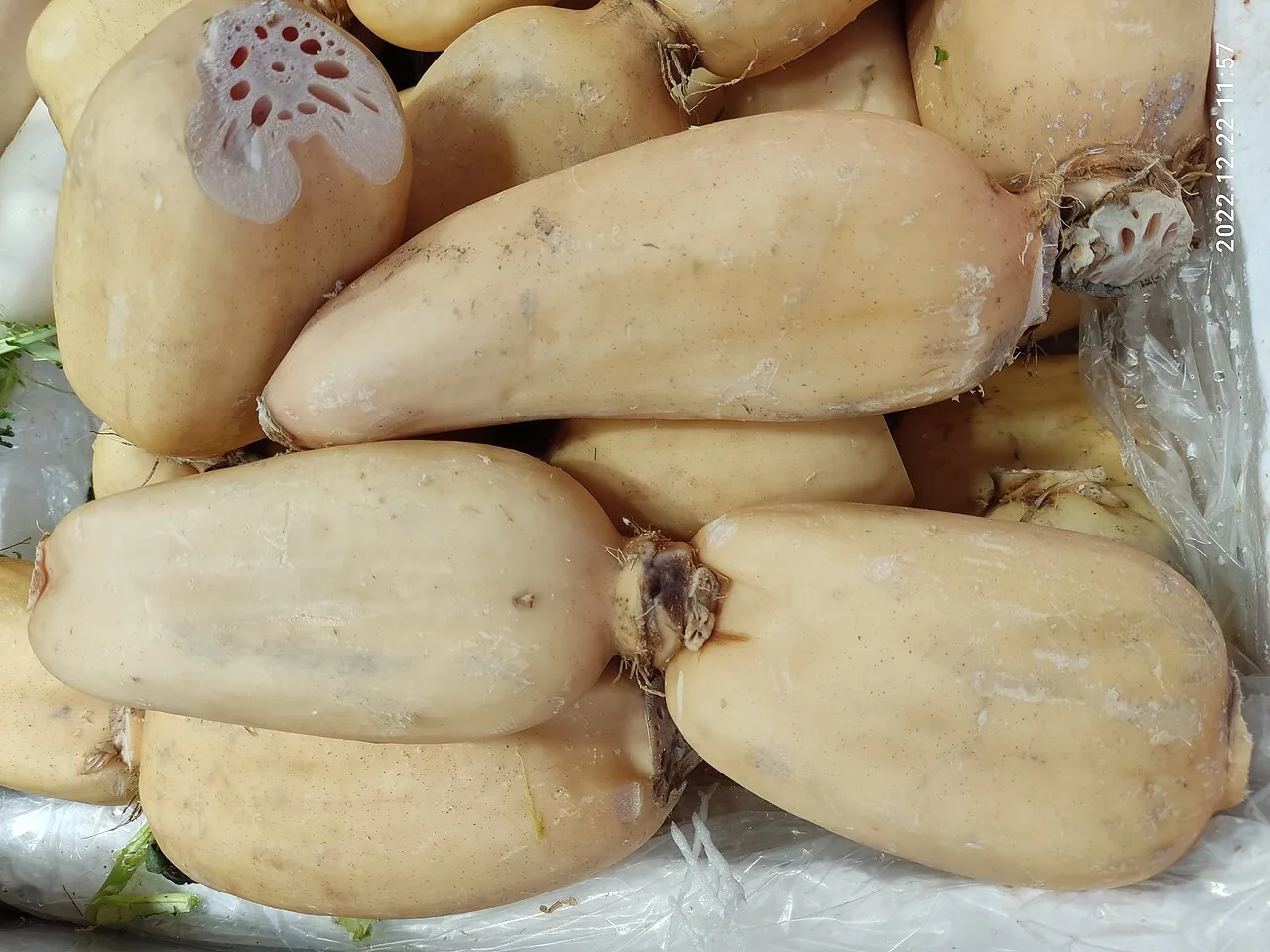
Lotus root (莲藕, lián'ǒu) is the edible underwater rhizome of the lotus plant (Nelumbo nucifera), not a true root but a modified stem that grows horizontally through the mud of ponds and shallow lakes. The rhizomes grow in long, segmented sections, typically 20-60 centimeters in length and 5-10 centimeters in diameter, covered by a thin brown or beige skin. When peeled and sliced crosswise, lotus root reveals its signature feature: a symmetrical pattern of hollow air channels — roughly 7 to 11 holes radiating from the center — that allows the plant to breathe underwater. The raw flesh is ivory-white, crisp, and slightly starchy, with a mild sweetness and a texture reminiscent of fresh water chestnut. The lotus is the parent plant from which this ingredient is harvested.
Lotus root requires peeling before cooking, as the thin skin is tough and earthy. Once peeled, it is usually sliced and immediately immersed in acidulated water (vinegar or lemon) to prevent discoloration from oxidation. The root can be eaten raw in salads (especially thin shavings dressed with vinegar), but is most commonly cooked. Popular preparations include stir-frying with ginger, scallion, and soy sauce; simmering in soups with pork ribs and peanuts; deep-frying as tempura in Japanese cuisine; stuffing the hollow cavities with glutinous rice and steaming or braising; and pickling in sweet vinegar. When cooked, lotus root retains much of its crunchy texture, making it distinctive among root vegetables. It is also dried and ground into a powder used as a thickener in soups and desserts.
Lotus root occupies a central place in Chinese culinary and symbolic culture. The lotus plant as a whole is one of the most important cultural symbols in East Asia, representing purity (出淤泥而不染, emerging unstained from the mud), harmony (和, he), and spiritual awakening in Buddhism and Daoism. In food culture, lotus root is especially valued during autumn and winter as a warming, nourishing ingredient. Traditional Chinese medicine classifies lotus root as cooling (凉, liang) in its raw state but neutral to warming when cooked. It is considered beneficial for the spleen and stomach, and is commonly used in convalescent diets. Lotus root dishes are a fixture of festive meals during the Lunar New Year and Mid-Autumn Festival, and the ingredient is related_to the concept of harmony through its cultural associations with the lotus flower.
Lotus root's growing cycle follows the rhythm of the aquatic year. Lotus plants emerge from dormancy in early spring (about T-start-of-summer when leaves emerge and buds form), bloom at midsummer (T-summer-solstice) with magnificent flowers reaching peak bloom (T-major-heat), and the rhizomes — the lotus roots — mature and fatten through late summer and autumn. The primary harvest season begins in late autumn after the leaves have died back, from approximately October through February, when the roots are at their sweetest and starchiest. Fresh lotus root is best in the cool months, with the peak quality arriving after the first frost has passed. The plant's full cycle — from spring emergence to winter harvest — embodies the natural timing that governs all aquatic agriculture.
As the harvested rhizome of the lotus plant, lotus root is directly related_to lotus. Lotus originates_from jiangnan, where it is iconic to the water towns and pond agriculture of the region. The lotus plant is related_to rice (both grow in paddy field ecosystems), to bamboo-basket (harvested and stored in woven baskets), to porcelain (lotus motifs decorated on ceramics), to shen-nong (documented in the herbal classic), and to fermentation (fermented lotus root is a traditional preparation). Lotus root is frequently paired with soy-sauce in braised and stir-fried dishes, and appears alongside mulberry in the agricultural landscapes of southern China.