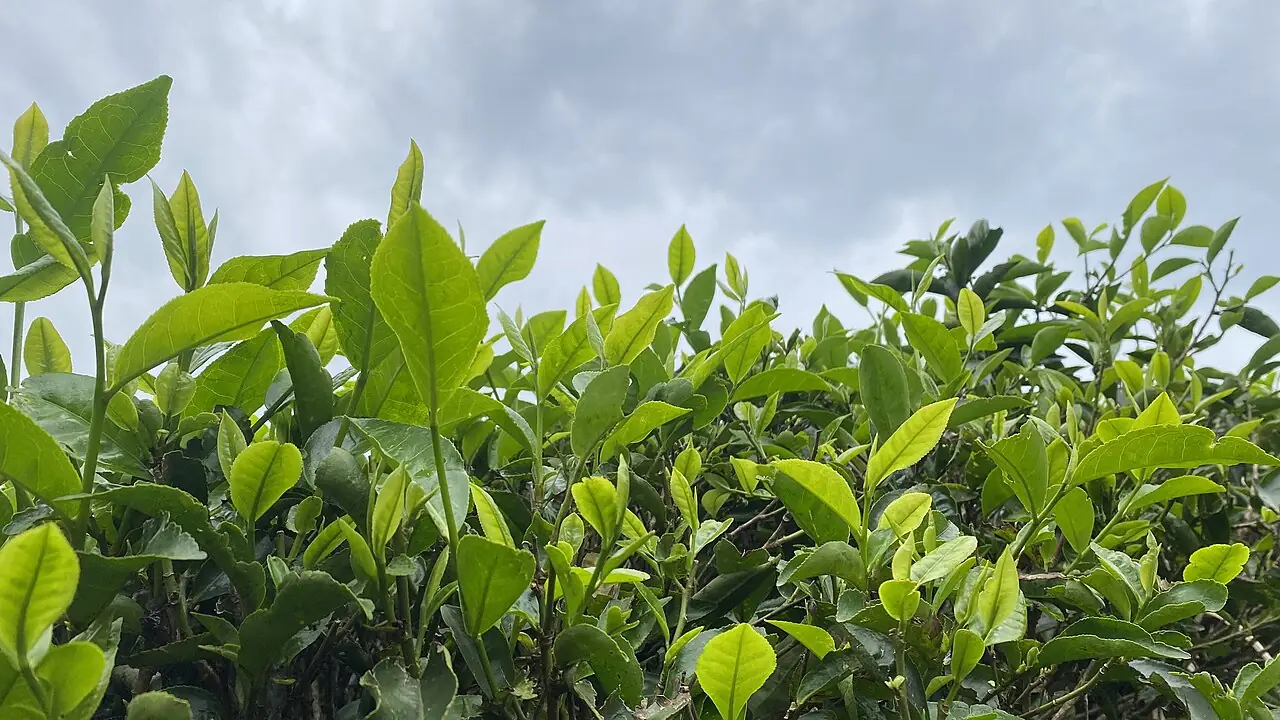
Green tea (绿茶, lǜchá) is the most minimally processed form of Camellia sinensis tea. Fresh-picked leaves are immediately subjected to heat — either pan-firing in the Chinese tradition or steaming in the Japanese tradition — to deactivate the polyphenol oxidase enzymes that cause oxidation. This fixation step preserves the leaf's natural green color, chlorophyll content, and high levels of catechins. The leaves are then rolled, shaped, and dried. The result is a tea with a pale green to golden liquor, a grassy or nutty aroma, and a clean, slightly astringent flavor profile that ranges from sweet and mellow to brisk and vegetal depending on the cultivar and growing region.
Green tea is a sub_type_of the broader category of tea (茶, cha), defined by its avoidance of oxidation. The processing technique varies widely by region and tradition. Chinese green teas such as Longjing (龙井, Dragon Well) are pan-fired and hand-pressed into flat leaves, producing a nutty, chestnut-like flavor. Biluochun (碧螺春, Green Snail Spring) is rolled into tight spirals with a fruity fragrance. Japanese green teas like Sencha are steamed, yielding a more vegetal, seaweed-like taste, while Matcha is shade-grown and stone-ground into a vibrant green powder for ceremonial use. Across all methods, the fundamental principle remains the same: arrest oxidation immediately after harvest. Green tea is used as a beverage and is central to tea-ceremony practice, particularly in the Japanese chanoyu tradition where Matcha is the ceremonial tea.
Green tea holds the deepest historical connection to Chinese tea culture. It was the original form of tea when Camellia sinensis was first brewed as a medicinal beverage in ancient China. Legend attributes the discovery of tea to Shen Nong (神农, Shennong), the mythical herbal emperor, and the earliest documented tea preparation describes green tea. The Classic of Tea (茶经, Cha Jing) by Lu Yu (陆羽, Lu Yu), the foundational text of tea culture, primarily describes green tea processing and brewing. Green tea is related_to tea-ceremony as the classic medium of formal tea practice, related_to tea-brewing for its specific temperature and steeping requirements (typically 70-80°C water for delicate leaves), and related_to lu-yu and the-classic-of-tea as the historical foundation of tea knowledge.
Green tea's seasonality is the most pronounced of any tea type. The first flush — the earliest spring harvest — is the most prized, occurring during the T-grain-rain (谷雨, Guyu) solar term around mid-April. These 'pre-Qingming' (明前, Mingqian) teas, harvested before the Clear and Bright (清明, Qingming) festival in early April, are considered the highest quality, with the most tender leaves and the most delicate flavor. The late spring harvest aligns with T-start-of-summer (立夏, Lixia), producing slightly more robust leaves. An autumn harvest occurs around T-white-dew (白露, Bailu), yielding green teas with a mellower character. Unlike black tea, there is no significant summer harvest for premium green teas, as the heat produces coarser leaves.
Green tea is a sub_type_of tea, inheriting the parent entity's network of relationships. Tea originates_from yunnan (the birthplace of the plant), jiangnan (the cultural heart of Chinese tea), and sichuan (one of the classical tea-growing regions). Green tea is the primary form related_to the rituals of the tea-ceremony, the techniques of tea-brewing, and the philosophical concept of harmony (和, he) that tea embodies. It also connects to umami (鲜味, xianwei), as high-quality green teas are rich in L-theanine, an amino acid that produces a savory, brothy sweetness.