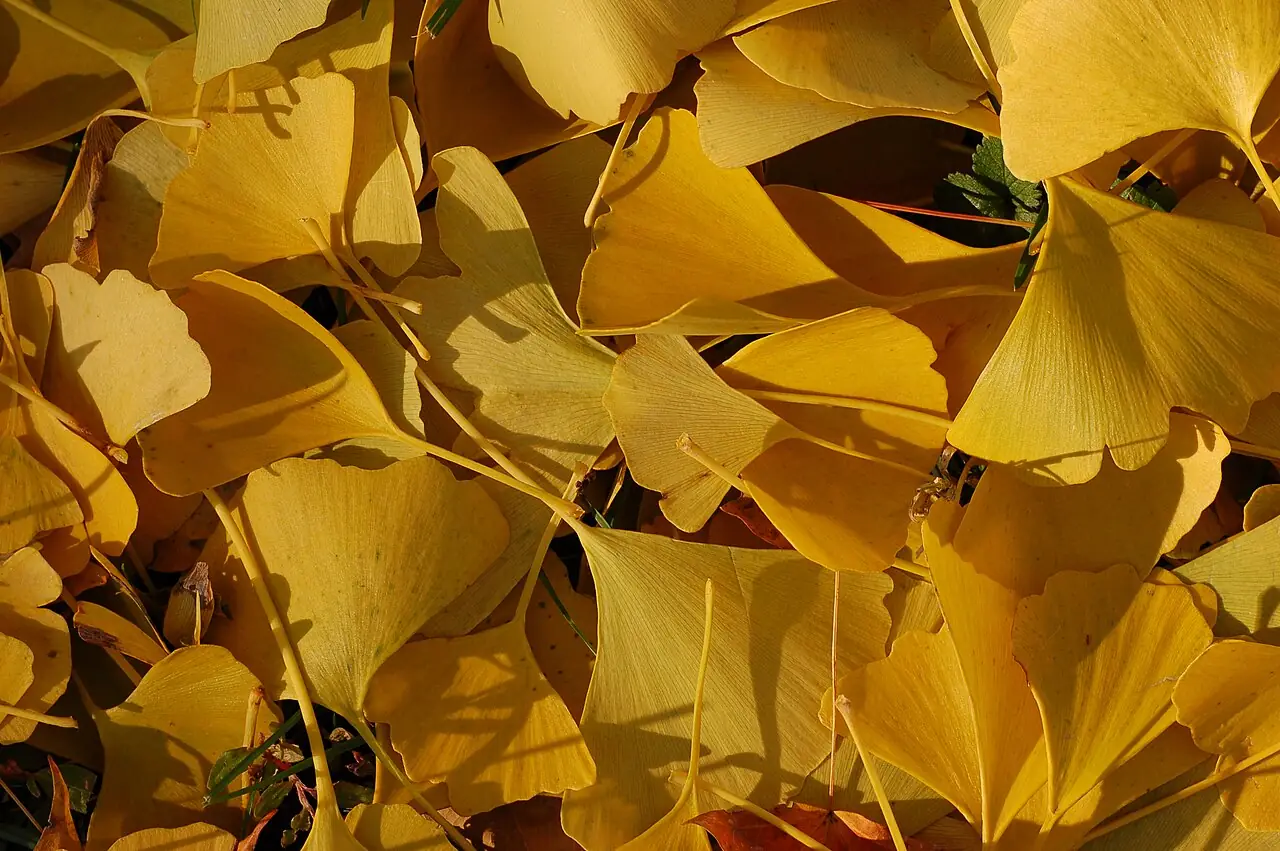
Ginkgo biloba (银杏, yínxìng) is one of the oldest living tree species on Earth, with fossil records dating back to the Permian period, roughly a quarter of a billion years ago. It is the sole surviving member of the division Ginkgophyta, making it a living fossil with no close living relatives. Native to China, ginkgo trees can live for over a millennium, with some temple specimens in China and Japan estimated to be more than 1,500 years old.
Ginkgo is remarkably resilient—it tolerates pollution, disease, pests, and urban conditions better than most trees, which is why it is extensively planted as a street tree worldwide. The tree is deciduous, with distinctive fan-shaped leaves that turn a brilliant golden yellow in autumn before falling en masse, creating spectacular seasonal displays. Female trees produce foul-smelling seeds encased in fleshy orange outer shells, but the inner nuts are a prized ingredient in East Asian cuisine.
In East Asian culture, ginkgo is deeply symbolic. The fan-shaped leaf represents longevity, resilience, and hope in Chinese and Japanese art. Ginkgo trees are commonly planted at Buddhist temples, Confucian academies, and imperial gardens. The tree's ability to survive extreme events—including urban heat and pollution in dense cities—has made it a powerful symbol of endurance and peace.
Ginkgo seeds (白果, báiguǒ, literally "white fruit") are used in Chinese cooking, particularly in congee, soups, and braised dishes. They have a subtle, slightly bitter flavor and a chewy texture. In traditional Chinese medicine, ginkgo seeds and leaves are used to improve circulation, enhance memory, and treat respiratory conditions. Modern research has focused on ginkgo leaf extracts for cognitive enhancement, though clinical results remain mixed. The wood is also valued for carving and furniture making, prized for its fine grain and workability.