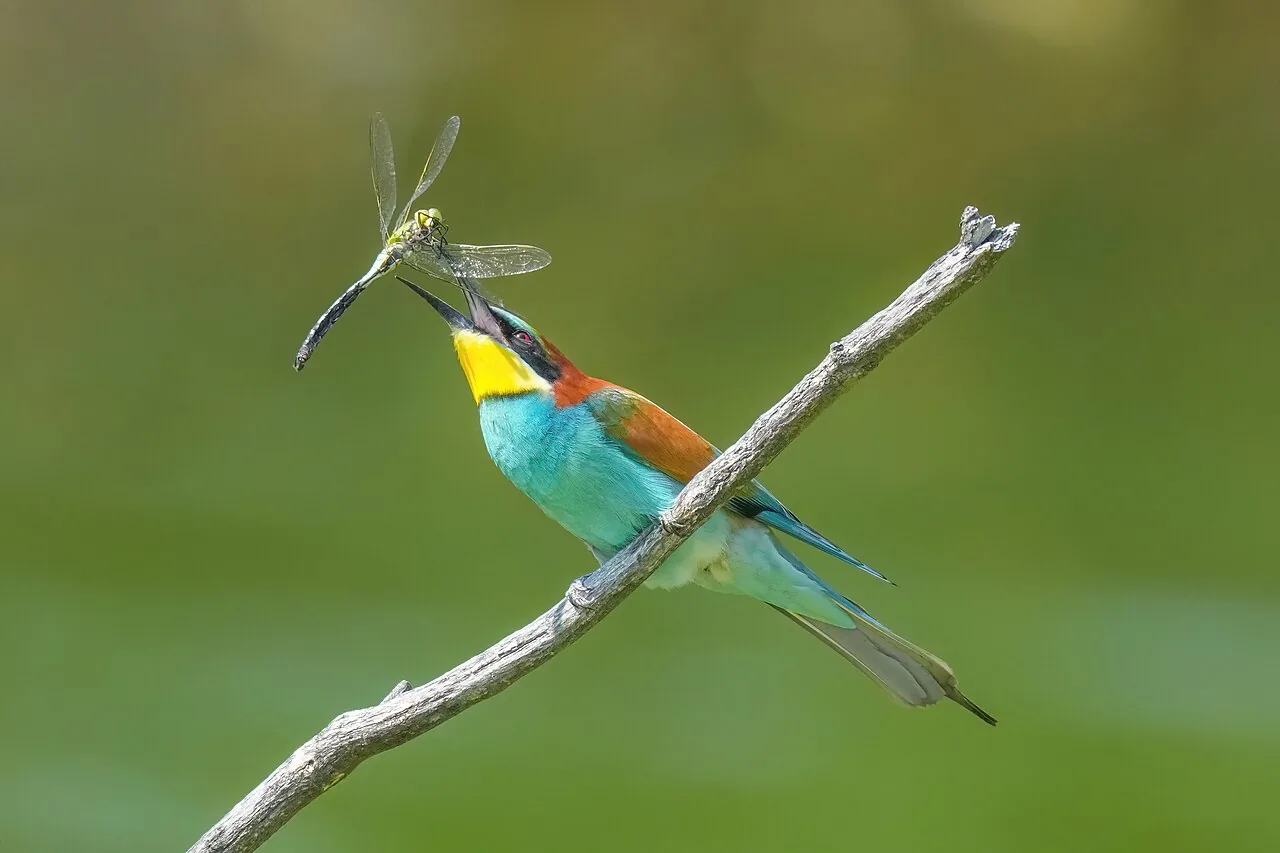
Dragonfly (蜻蜓, qīngtíng) is a predatory insect of the order Odonata, suborder Anisoptera, characterized by its elongated body, two pairs of transparent wings, and exceptionally large compound eyes that provide nearly 360-degree vision. Over 5,000 species exist globally, with East Asia being home to notable species such as the emperor dragonfly (Anax imperator) and the common skimmer (Orthetrum cancellatum). Dragonflies are among the most agile fliers in the insect world, capable of hovering, flying backward, and reaching speeds of up to 54 kilometers per hour.
Dragonflies begin life as aquatic nymphs (naiads) in ponds, lakes, and slow-moving streams, where they spend months to several years hunting tadpoles, mosquito larvae, and small aquatic invertebrates. When ready to metamorphose, the nymph climbs a emergent plant stem, splits its exoskeleton, and emerges as a winged adult—a process most visible in late spring and early summer. The adult stage lasts only a few weeks, during which dragonflies are voracious aerial predators of mosquitoes, gnats, and flies, making them invaluable natural pest controllers in wetland ecosystems.
In East Asian art and poetry, the dragonfly (蜻蜓, qīngtíng) is a symbol of summer, lightness, and the fleeting beauty of the natural world. Its name in Chinese literally means "clear pavilion," evoking the image of these delicate insects hovering above lotus ponds. Dragonflies appear frequently in classical Chinese painting alongside lotus (lotus) blossoms and bamboo (bamboo), their transparent wings rendered with exquisite precision. In Japanese culture, the dragonfly (tonbo) is a symbol of courage and victory, and the island nation itself was anciently known as Akitsushima (秋津島, "Dragonfly Island"). Their brief but brilliant adult lifespan also makes them a meditation on impermanence—a quality deeply resonant with Daoist and Buddhist philosophical traditions.
---
---