Entity Profile
Crane
Crane (鹤, hè) is a large, long-necked, long-legged wading bird of the family Gruidae
Animal
primary type
Level 1
Concrete entity
3
relationships mapped
Crane (鹤, hè) is a large, long-necked, long-legged wading bird of the family Gruidae
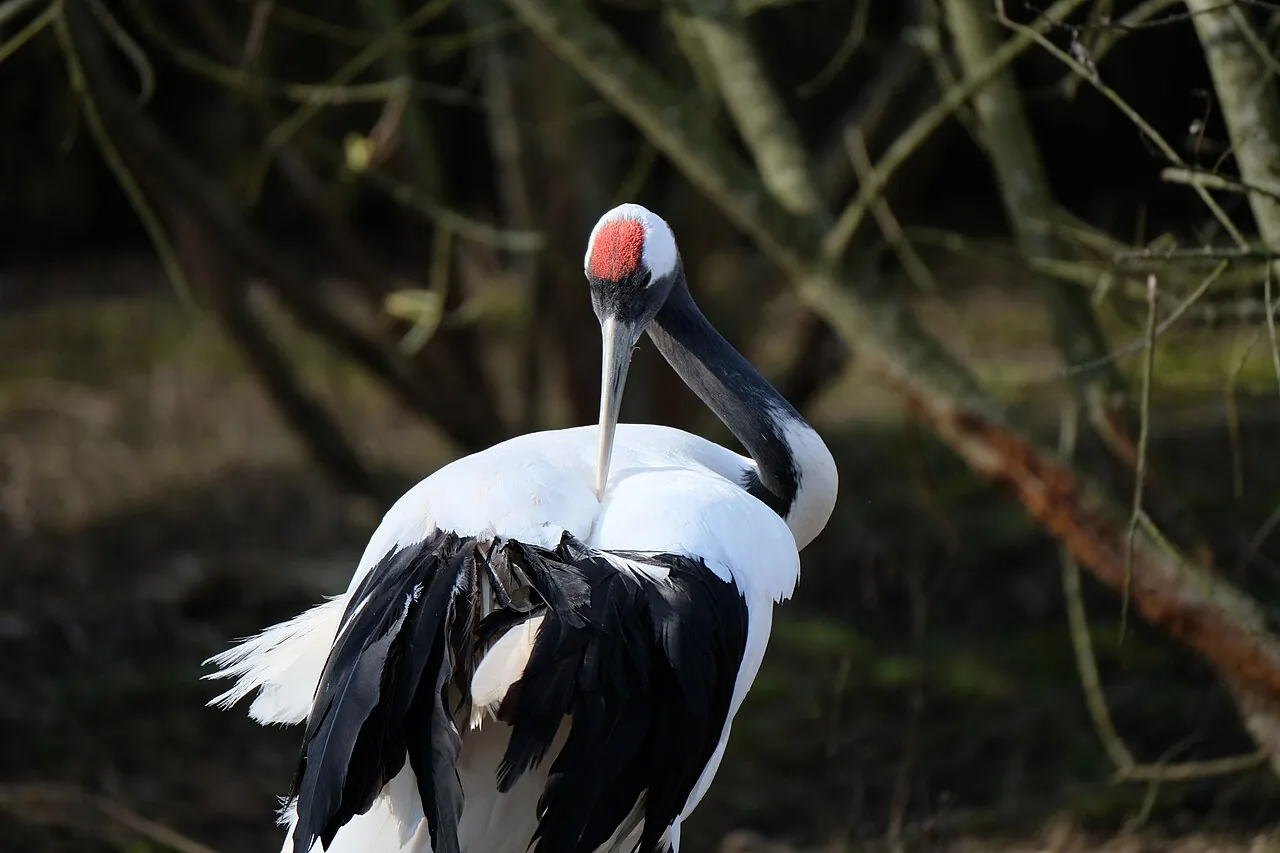
Crane (鹤, hè) is a large, long-necked, long-legged wading bird of the family Gruidae. Several species are native to East Asia, most prominently the red-crowned crane (Grus japonensis, 丹顶鹤) and the white-naped crane (Antigone vipio). Standing up to 158 centimeters tall with a wingspan exceeding 240 centimeters, the red-crowned crane is distinguished by its striking white plumage, black secondary wing feathers, and the patch of bare red skin on its crown—the "red crown" that gives the species its name. Cranes inhabit wetlands, marshes, and river deltas across northeastern China, the Korean Peninsula, and Japan.
Cranes are among the longest-lived bird species, with wild individuals reaching 30-40 years and captive specimens living up to 70 years. They are monogamous, forming lifelong pair bonds reinforced by elaborate courtship dances involving bowing, leaping, and wing-flapping displays. Their migration patterns are synchronized with seasonal transitions: they breed in northern wetlands during spring and summer, then migrate south to coastal marshes and rice paddies for winter. In the wetlands of Jiangnan (jiangnan) and along the Yangtze River (yangtze-river), cranes are a barometer of ecological health.
In East Asian culture, the crane (鹤, hè) is the preeminent symbol of longevity, immortality, and marital fidelity. Its white plumage connotes purity, its legendary lifespan represents the wish for long life, and its monogamous nature makes it an emblem of devoted partnership. In Daoist tradition, cranes are the mounts of immortals (xiān, 仙鹤)—carrying enlightened souls between the earthly and celestial realms. Crane imagery pervades Chinese painting, poetry, and decorative arts, frequently paired with pine (pine) in the auspicious motif "Pine and Crane" (松鹤延年, sōng hè yán nián), symbolizing enduring vitality.
---
---
Each relationship represents a meaningful semantic link between Crane and other entities in the Atlas knowledge graph.
These 24 solar terms mark when Crane appears, peaks, or transforms through the seasons.
Solar term #19 · Nov 7-8 · Water
Winter crane migration
View on Dao of Seasons ↗These entities share semantic relationships with Crane in the Atlas knowledge graph.
Crane (鹤) is the Atlas's preeminent symbol of longevity and spiritual transcendence. Its migration patterns—breeding in northern wetlands, wintering in Jiangnan and Yangtze River marshes—connect Place (Jiangnan, yangtze-river) with seasonal rhythms. In Daoist tradition, cranes are the mounts of immortals (仙鹤), linking the Animal domain to Concept (Daoism, harmony) and Plant (pine—the auspicious 'Pine and Crane' motif).
The red-crowned crane is China's most culturally significant bird, appearing in art, poetry, and Daoist iconography for over two millennia.
Crane migration southward signals winter's approach in Jiangnan wetlands.
https://www.britannica.com/animal/crane-bird
https://www.allaboutbirds.org/guide/Cranes/
https://www.iucnredlist.org/search?taxonomies=100516&searchType=species
Washington Post · 327K views · YouTube ↗
Mark Smith · 79K views · YouTube ↗
Animal behavior, ecology, and conservation. Owner of panda and related animal entities.
Owner since 2026-01-01